Amity School of Engineering & TechnologyIn association with IEEE MP Section

Research-O-Thon202648-Hour
Research Sprint

  • LocationAmity University Madhya Pradesh, Gwalior
  • Date21 to 23 September 2026

A three-day intensive research sprint where a raw idea becomes a submission-ready, IEEE-formatted manuscript — drafted, prototyped, defended and judged, all inside one campus.

Sprint begins in
––Days
––Hours
––Minutes
––Seconds
Scroll

Technical Sponsors & Host Institution

  • IEEE MP Section
  • IETE
  • AII
  • Amity University Madhya Pradesh
  • MIR Labs Society
01 — The Event

Three days. One manuscript. No shortcuts.

Research-O-Thon is not a hackathon with a paper bolted on. It is a structured research sprint run by Amity School of Engineering and Technology (ASET), Amity University Madhya Pradesh, in association with the IEEE MP Section and the IEEE Student Chapter — and the deliverable is the paper itself.

  • 0Hours of SprintAcross three days
  • 0Manuscripts Targeted35–50 papers generated
  • 0Members per TeamInterdisciplinary encouraged
  • 0/ ₹300Registration Fee₹200 for Amity students · ₹300 for students other than Amity

Format

A three-day intensive sprint built around rapid manuscript drafting, hardware and software prototyping, data processing and research methodology.

Teams

One to four participants per team. Interdisciplinary teams are actively encouraged — a systems mind and a domain mind write a better paper together.

Output

Every registered team aims to leave with a complete, submission-ready research paper. The event targets 35 to 50 manuscripts generated overall.

Standard

IEEE two-column formatting, a similarity index under 15%, disclosed AI use, and a live defence in front of an expert jury panel.

02 — Why It Is Different

Most events hand you a certificate.
This one hands you a paper.

Six things that change what you walk out with — each one built into the schedule rather than left to chance.

  1. You leave with a manuscript

    Not a certificate of attendance. Not a slide deck. A complete, submission-ready paper in IEEE two-column format, written by you and stress-tested by a jury.

  2. Mentors sit beside you

    Faculty and IEEE reviewers work the floor through both drafting nights — framing your research gap, tightening methodology, and fixing citations in real time.

  3. A defence, not a demo

    Phase 1 makes you defend your research gap and proof-of-implementation. Phase 2 puts your final paper in front of an expert panel. Both build the muscle publication demands.

  4. Publication-grade discipline

    Similarity under 15%, disclosed AI use, IEEE referencing, a real abstract. The habits that separate an accepted paper from a desk rejection.

  5. Build hardware or software

    Prototyping benches and datasets are open through the sprint. Your results section can be backed by an actual working artefact, not a hypothetical.

  6. IEEE on your record

    Organised with IEEE MP Section and the IEEE Student Chapter, with a membership drive and orientation for participants who want the pathway.

03 — Research Tracks

Pick the ground you already know.

Six tracks, mapped to where engineering research is actually being published right now. Choose one at registration — the exact problem statement gets sharpened with your mentor on Day 1.

Track 01

Deep learning, natural language processing, computer vision, generative models, reinforcement learning, and responsible AI.

  • Deep Learning
  • NLP
  • Computer Vision
  • Generative Models
  • AI Ethics

You leave withA trained model, an ablation table, and a results section that survives review.

Register on this track
Track 02

Big-data pipelines, statistical modelling, visualisation, forecasting, and decision-support systems.

  • Pipelines
  • Statistical Modelling
  • Forecasting
  • Visualisation
  • Decision Support

You leave withA reproducible pipeline and a dataset your figures actually come from.

Register on this track
Track 03

Algorithms, distributed systems, networking, cryptography, secure software engineering, and cloud infrastructure.

  • Algorithms
  • Distributed Systems
  • Cryptography
  • Networking
  • Cloud

You leave withA threat model, a benchmark, and a defensible complexity argument.

Register on this track
Track 04

Sensor networks, embedded firmware, FPGA design, robotics, and integrated hardware–software builds.

  • Sensors
  • Firmware
  • FPGA
  • Robotics
  • Edge Computing

You leave withA working bench prototype and measurements taken from it, not from a datasheet.

Register on this track
Track 05

Green computing, smart infrastructure, health-tech, agri-tech, and engineering built for social impact.

  • Green Computing
  • Smart Infrastructure
  • Health-Tech
  • Agri-Tech
  • Social Impact

You leave withAn impact case backed by numbers a reviewer can check.

Register on this track
Track 06

Study design, systematic literature review, citation practice, reproducibility, and academic integrity.

  • Study Design
  • Systematic Review
  • Citation Practice
  • Reproducibility
  • Integrity

You leave withA survey or methodology paper with a literature map that holds up.

Register on this track
01
Track 01

Artificial Intelligence & Machine Learning

Deep learning, natural language processing, computer vision, generative models, reinforcement learning, and responsible AI.

  • Deep Learning
  • NLP
  • Computer Vision
  • Generative Models
  • AI Ethics

You leave withA trained model, an ablation table, and a results section that survives review.

Register on this track
04 — Phases & Standards

Two phases. Two defences. One paper.

The sprint is broken into two evaluated phases so no team drifts. You defend the idea before you build on it, and defend the manuscript before the jury scores it.

Phase 01Day 1 → Day 2

Research Gap & Implementation Defence

Teams present their core problem statement, research gap, objectives, proposed architecture, and initial proof-of-implementation or dataset.

Deliverables
  • Abstract
  • Paper outline
  • Preliminary technical results
Phase 02Day 3

Final Paper Presentation & Jury Evaluation

Final manuscript submission and an oral presentation defence in front of an expert panel of academic and IEEE reviewers.

Deliverables
  • Full paper draft (PDF)
  • Presentation slides
  • Live Q&A defence
Manuscript & IEEE Standards

What counts as a submission

These are hard requirements, not guidelines. A paper that misses them is not scored on merit.

IEEE Template

All submissions must strictly follow the standard IEEE Two-Column Format — US Letter size, 10 pt Times New Roman.

Originality

Papers must be original and must not be under simultaneous review at another journal or conference.

Similarity Index

Plagiarism / similarity index must remain below 15%, excluding references. Verified before jury evaluation.

AI Disclosure

AI-generated text or assistance must be explicitly disclosed in the Acknowledgements or Methods section, in line with IEEE AI ethics policies.

Required Structure

Every submitted manuscript must carry these sections, in this order, in the IEEE two-column template.

  1. 01Title
  2. 02Abstract (150–250 words)
  3. 03Keywords
  4. 04Introduction
  5. 05Literature Review / Research Gap
  6. 06Methodology / System Design
  7. 07Results & Discussion
  8. 08Conclusion
  9. 09IEEE References
05 — Evaluation

How the jury actually scores you.

Published in advance, applied without exception. Four weighted criteria decide the result — and formatting and originality are scored in their own right inside them.

  • 01Research Gap & Novelty

    Clarity of problem definition and distinction from existing work.

    25%
  • 02Technical Depth & Execution

    Soundness of methodology, hardware/software prototype, or experimental validation.

    30%
  • 03Manuscript Quality

    Structure, clarity, adherence to IEEE format, figures, and reference quality.

    25%
  • 04Presentation & Q&A Defence

    Quality of the oral presentation and the response to jury questions.

    20%
Total100%
Inside Manuscript Quality — 25%

Formatting & Plagiarism

The Manuscript Quality band rests on two explicitly scored components. Both are checked before the jury ever sees your paper.

IEEE Formatting Compliance

Two-column IEEE template, US Letter, 10 pt Times New Roman, correct section order, captioned figures and tables, and IEEE-style references.

PenaltyPapers submitted outside the IEEE template forfeit this component entirely and are returned unscored on format.

Originality & Plagiarism Index

A similarity index below 15%, excluding references, clears this component in full. Between 15% and 25%, credit is reduced at the jury’s discretion.

PenaltyAbove 25% similarity, or any fabricated or pre-written manuscript, means immediate disqualification.

Both components are mandatory. IEEE formatting compliance and originality together make up the full Manuscript Quality weightage — and a similarity index below 15%, excluding references, is required of every submitted paper.

Code of Conduct & Disqualification

Non-negotiables

  • Research Ethics

    Any form of data fabrication, pre-written or plagiarised manuscripts, or undisclosed submission to third-party events leads to immediate disqualification.

  • Mandatory Attendance

    At least one registered co-author must be physically present at the venue during all progress checks and the final evaluation sprint.

  • Single Submission

    A team may submit exactly one manuscript. Simultaneous submission of the same work elsewhere during the event is not permitted.

  • Fair Use of AI

    AI assistance is permitted but must be disclosed. Undisclosed AI-generated content is treated as a breach of research integrity.

06 — Recognition

Awards that mean something on a CV

Judged on substance by an expert panel, endorsed by ASET and the IEEE Student Chapter.

  • Best Research Paper

    For the manuscript with the strongest research gap, methodology and scholarly rigour across the full rubric.

  • Best Technical Execution

    For the most convincing prototype, experimental validation or dataset work behind the results section.

  • Best Presentation & Defence

    For the team that presents and defends its work most clearly under jury questioning.

  • Certificate of Participation

    Every registered participant receives an official certificate endorsed by ASET and the IEEE Student Chapter.

07 — Organizing Committee

The people running the sprint.

Faculty from across Amity School of Engineering and Technology, working with the IEEE Student Chapter, ASET, Amity University Madhya Pradesh.

Under the Patronage of
Chief Patron

Lt. Gen. V. K. Sharma, AVSM (Retd.)

  • Pro Chancellor, Amity University Madhya Pradesh
  • Senior Vice President, RBEF
Patron

Prof. (Dr.) R. S. Tomar

  • Vice Chancellor, Amity University Madhya Pradesh
Co-Patron

Prof. (Dr.) M. P. Kaushik

  • Pro Vice-Chancellor (Research), Amity University, Madhya Pradesh
Organizing Secretary

Dr. Alok Jain

Director, ASET

Event Organizing Chair

Dr. Dinesh Sharma

Associate Professor, Department of CSE & Incubator Coordinator

Event Organizing Chair

Dr. C. S. Raghuvanshi

HoD, CSE

Core Committee

07
  • Dr. Raghvendra Kumar Mishra
  • Dr. Ganesh Gupta
  • Dr. Anuj Singh
  • Dr. Ashok Kumar
  • Dr. Jhankar Moolchandani
  • Dr. Vikrant Chole
  • Mr. Praveen Gupta

Finance Committee

04
  • Dr. Ghanshyam
  • Dr. Devendra Kumar Sharma
  • Dr. Deepak Motwani
  • Dr. Ashish Tripathi

Registration & Stage Committee (Certificate)

05
  • Dr. Madhvi Dhingra
  • Dr. Nishtha Parashar
  • Dr. Ankita
  • Dr. Harshita Chaurasiya
  • Dr. Sunidhi Shrivastav

Publicity Committee

07
  • Dr. Samta Jain Goyal
  • Dr. Rajeev Goyal
  • Dr. Gaurav Sharma
  • Dr. Shyam Gupta
  • Dr. Manish Gupta
  • Dr. Satya Prakash
  • Dr. Satish Bansal

Discipline Committee

03
  • Dr. Ashok Shrivastava
  • Dr. Kapil Sharma
  • Mr. Rohit Singh Thakur

Student Organizing Team

Department of CSE — ASET

04

IEEE Student Chapter Members, ASET, Amity University Madhya Pradesh

  • Mayank Sahu
  • Jyotima Tomar
  • Vaibhav
  • Anshul Gole
08 — Registration

Take the seat. Write the paper.

Registration is handled through the official Google Form. Fill it once for your team, and bring a valid institutional ID to the venue.

External Participants₹300

Students, research scholars and professionals from other institutions.

Amity University Madhya Pradesh students pay ₹200 only. The fee is all-inclusive and non-refundable once confirmed.

What the fee covers
  • Registration kit & IEEE-format starter template
  • Mentor access through both drafting nights
  • Prototyping bench & dataset access
  • Working lunch, breakfast and refreshments
  • Plagiarism screening on your final draft
  • Certificate of participation
  • Eligibility for all awards
21 – 23 September 2026AUMP, GwaliorTeams of 1–4
Register on the Official Form

Opens the Google Form in a new tab. Queries: dsharma@gwa.amity.edu

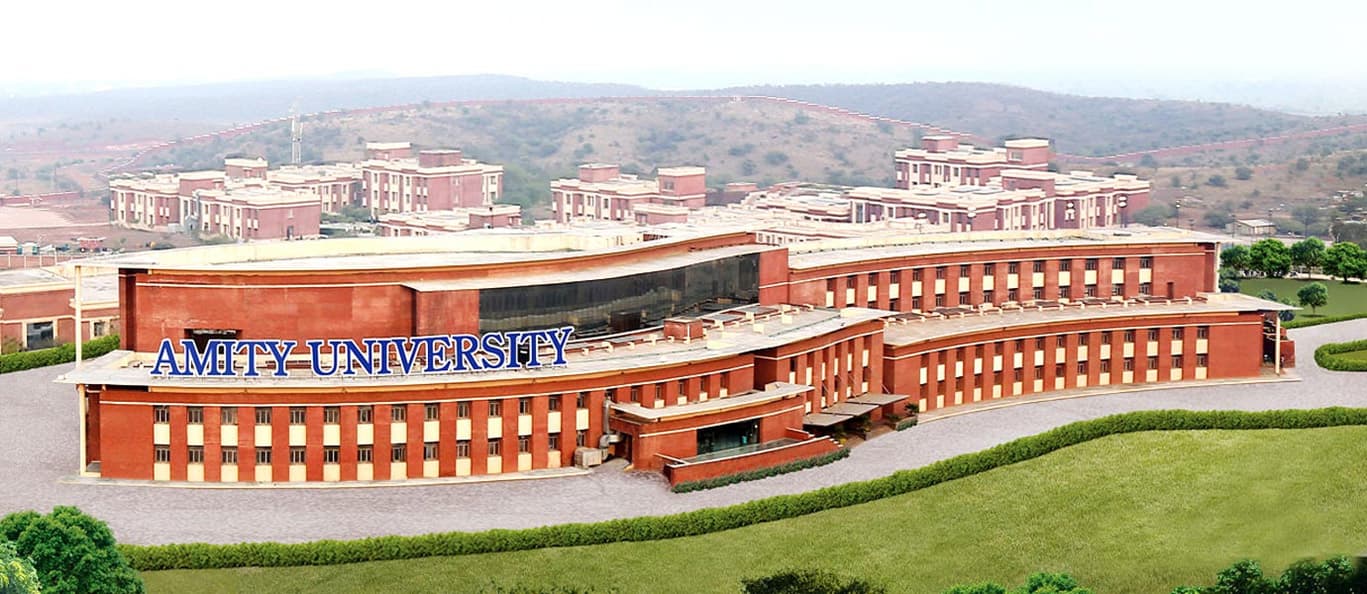
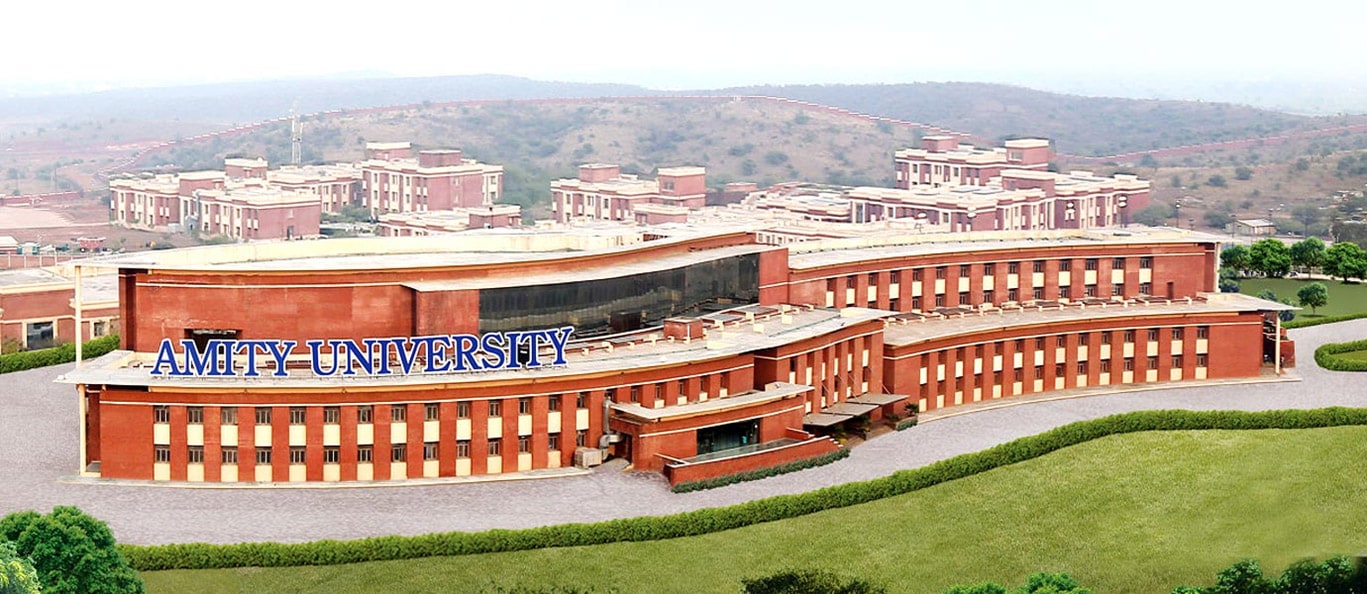
Amity University Madhya Pradesh campus, GwaliorAmity University Madhya Pradesh
09 — Venue

Gwalior. Three kilometres from the runway.

Amity School of Engineering & Technology (ASET)
Maharajpura Dang, Opposite Gwalior Airport, Gwalior – 474005, Madhya Pradesh

  • By AirGwalior Airport (GWL) — approximately 3 km from campus
  • By RailGwalior Junction — approximately 10 km from campus
  • By RoadDirectly connected via NH-44 and state highways

Undergraduate, postgraduate and doctoral students, early-career academics, IEEE members and industry R&D participants are all welcome. There is no branch restriction — interdisciplinary teams are actively encouraged.

No. You need a research direction and the willingness to work. The entire point of the sprint is to take you from a rough idea to a structured, submission-ready manuscript with mentor guidance at every stage.

Teams may consist of 1 to 4 participants. You may also register individually. Interdisciplinary teams — for example, a CSE student paired with an electronics or biotech student — are encouraged.

Amity University Madhya Pradesh students pay ₹200 only, on presentation of a valid student ID. Participants from other institutions pay ₹300. The fee is all-inclusive of the kit, meals, mentorship and certification.

Manuscript Quality carries 25% of the total, and both formatting and originality are checked inside it before the jury scores your paper. Your manuscript must follow the IEEE two-column template, and the similarity index must stay below 15%, excluding references. Above 25% similarity leads to disqualification.

Yes, but you must disclose it. Any AI-generated text or assistance has to be stated explicitly in the Acknowledgements or Methods section, in line with IEEE AI ethics policies. Undisclosed use is treated as a breach of integrity.

No. The event is organised in association with IEEE MP Section, but submission to any journal or conference remains a separate process with its own peer review. What Research-O-Thon guarantees is a complete, publication-ready draft and the discipline to get it there.

Your laptop and charger, any hardware or datasets your work depends on, reference material, and a valid institutional ID. Everything else — meals, workspace, mentors and screening — is provided.

11 — Contact

Bring the idea.
We will handle the rest.

  • Contact Emaildsharma@gwa.amity.eduEvent Organizing Chair, Department of CSE, ASET
  • VenueAmity University Madhya PradeshMaharajpura Dang, Opposite Gwalior Airport, Gwalior – 474005, Madhya Pradesh
  • Dates21 – 23 September 2026Three days · 48 hours of sprint

Registrations for Research-O-Thon 2026 are open.

Register Now